
 1-800-667-3061
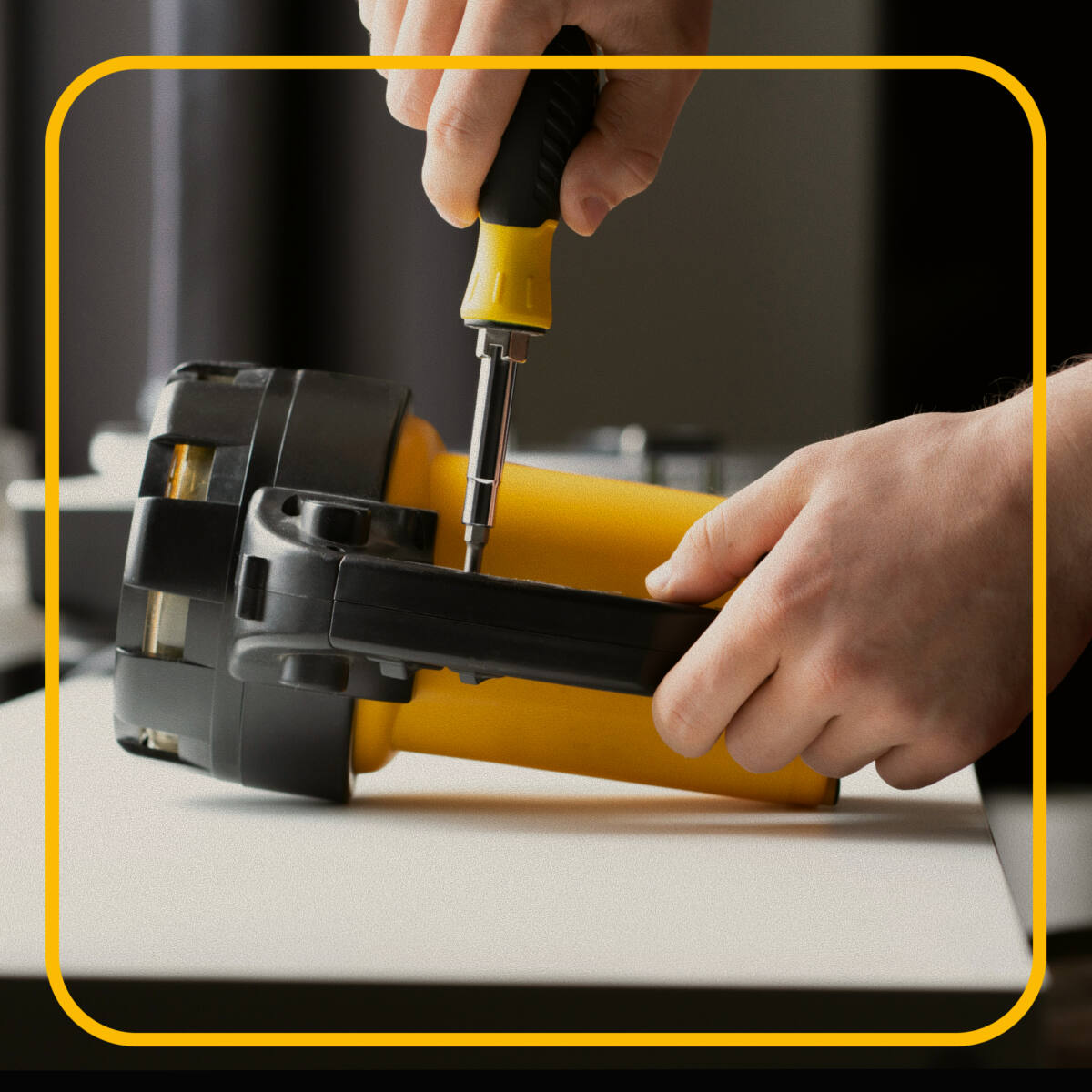
A pneumatic nailer or stapler is one of the least expensive pieces of equipment on a production line or a job site. It is also one of the few that can stop everything when it fails. A tool that jams every twenty cycles, double-fires or drives inconsistently doesn't just slow the operator down. It raises reject rates, damages material and eats into the margin on every unit that leaves the shop.
Most of those failures are not mechanical mysteries. They come from three places: the air that feeds the tool, the fasteners that go through it, and the wear parts that nobody replaced in time. Each one is manageable with a routine that takes minutes, not hours.
Start with the air
Compressed air carries two things a pneumatic tool doesn't want: moisture and debris. Moisture condenses in the compressor tank and the lines, then travels straight into the tool, where it washes out lubricant and corrodes internal surfaces. In a cold shop or on an autumn job site, that same moisture can freeze in the line and stall the tool outright.
The fix starts at the compressor. Drain the tank at the end of every shift, not once a week. Install a filter, regulator and lubricator unit (FRL) as close to the tool as the setup allows, and check the filter bowl daily. Run the tool at the pressure indicated in its manual. Cranking the pressure up to compensate for a tool that drives weakly doesn't solve the underlying problem. It accelerates wear on the driver blade, the bumper and the seals.
Hose length and diameter matter too. A long, narrow hose drops pressure between the compressor and the tool, and the operator ends up chasing a setting that was never the issue.
Oil it, every day
Unless a tool is explicitly marked oil-free, it needs pneumatic tool oil in the air inlet at the start of each shift, in the amount its manual calls for. That's the entire step. Skipping it is one of the most common reasons tools come in for repair with scored cylinders and dried, cracked O-rings.
Two things to avoid: using the wrong oil (motor oil, WD-40 and general-purpose lubricants attack the seals) and overdoing it (excess oil ends up blown onto the work surface). Daily, with the right product, in the right amount.
Watch the wear parts
Every pneumatic tool has a short list of parts that are designed to wear out: O-rings, the driver blade, the bumper, the piston seal, the trigger valve. None of them are expensive. All of them are cheap compared to a tool that's sitting on a bench while the line waits.
A weekly inspection catches most of it. Look for air leaking from the cap, the nose or the trigger, which usually points to a failing O-ring. Check the driver blade tip for mushrooming or chipping, which shows up as fasteners not seating flush. Test the safety contact tip: it should move freely and return fully. If the tool needs a harder push than it used to, something in the nose assembly is binding.
Keep a small stock of O-ring kits and driver blades on hand for the tools that run every day. A five-minute rebuild in the shop beats a week without the tool.
The fastener is part of the maintenance plan
This is the part most maintenance guides skip. The fastener that goes through the tool has a direct effect on how long that tool lasts.
A collated strip or coil that's out of specification, whether in wire diameter, collation angle, head profile or coil wind, doesn't feed cleanly. The tool jams, the operator clears it, and every clearing cycle puts stress on the magazine, the feed pawl and the nose. Fasteners with inconsistent coating thickness or rough shanks add friction on every drive. Over thousands of cycles, that's measurable wear.
The same applies to mixing fasteners across brands without checking compatibility. A wide crown staple that's a fraction off in crown width or a coil nail with the wrong wire angle will run, but not well, and the tool pays for it.
Shur-Fast manufactures part of its range at its Montreal facility and sources the rest through its network of suppliers, with the same quality requirements for both. Our coil nails and staples are built to run in the major pneumatic tool brands, and we can confirm fit for a specific tool before you commit to a volume order. If you're seeing feed problems that a rebuild didn't solve, the fastener is often where the answer is.
Signs it's time to send it in
Some problems don't belong on the shop bench. Send the tool in when:
- A rebuild with fresh O-rings and a new driver blade doesn't restore consistent drive depth
- The tool double-fires or fires without full contact, which is a safety issue, not a nuisance
- There's visible damage to the cylinder, the magazine rail or the nose casting
- The tool has been running for years without a full service and the operators have adapted to its quirks
That last one is worth a second look. Operators are good at working around a tool that's slowly declining. By the time someone flags it, the tool has usually been costing cycle time for months.
Repair, parts and optimization, all brands
Shur-Fast has long serviced pneumatic nailers and staplers alongside the fasteners it makes for them. Our repair service covers all major brands, backed by an inventory of replacement parts. When a tool comes in, we don't just replace the part that failed. We look at how the tool is being used, what it's driving and what it's fed with, and we make adjustments that improve how it runs going forward.
For high-volume operations, that can also mean selecting or adapting the right tool for the application rather than living with one that was never quite the right fit.
If a tool on your line has been giving you trouble, get in touch. A conversation about what it's doing, and what it's driving, usually points to the fix.
Related reading