
 1-800-667-3061
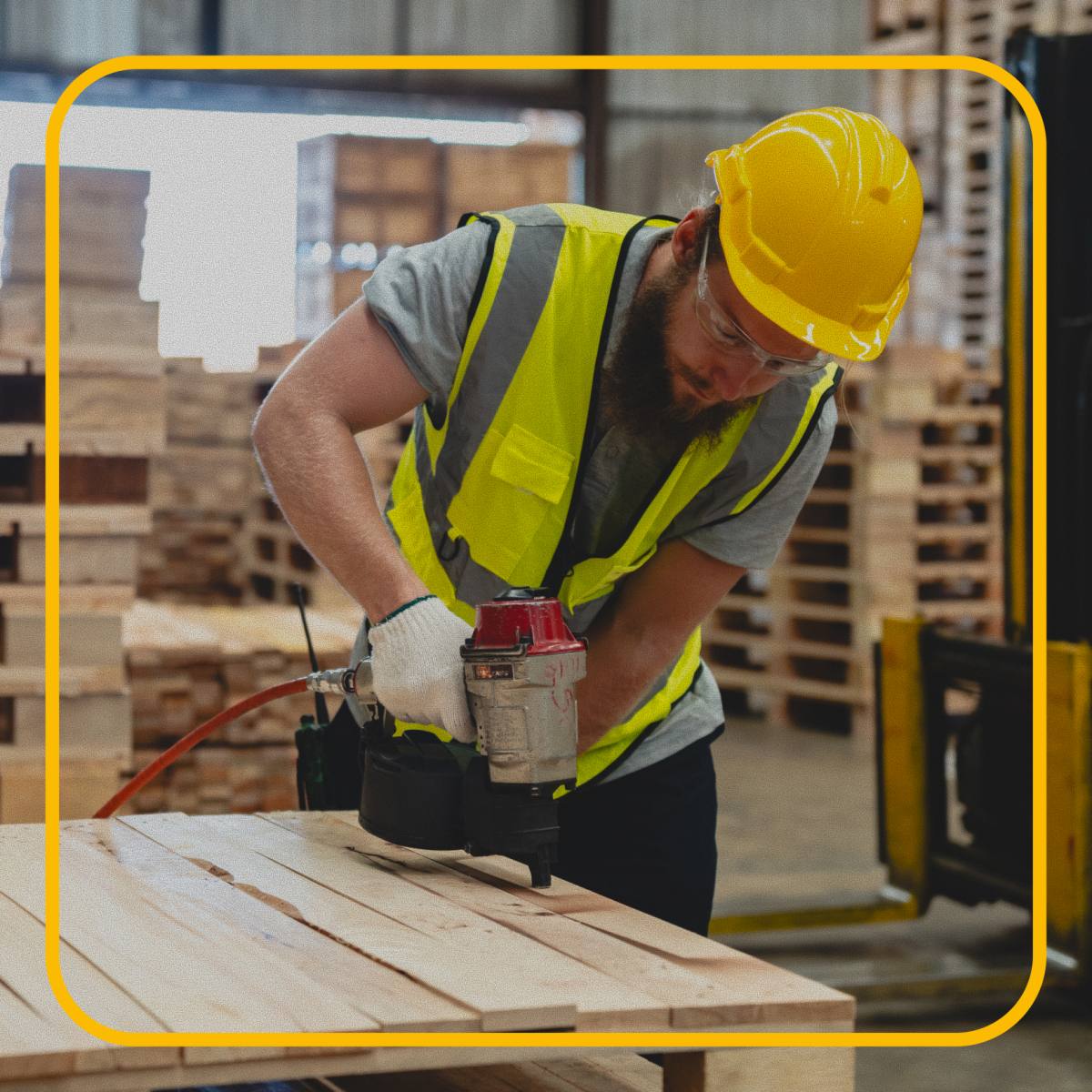
For a pallet manufacturer, the fastener sets the production rate and the reject rate. At thousands of units a shift, a small difference in the fastener turns into hours of downtime, repeated jams and pallets rejected on the line. The useful measure is cost per pallet shipped.
That is the point we made in our piece on industrial ROI and the true cost of generic fasteners: the lowest sticker price routinely hides the highest total cost. In high-volume pallet production, every jam and every failed joint multiplies across the run.
Holding power comes first
A pallet spends its life being loaded, stacked, handled and shaken. A smooth-shank fastener holds poorly under that regime. Repeated stress works it loose, and a loose joint becomes a rejected or returned pallet.
Ring-shank nails resist withdrawal because their rings bite into the wood fibres, which means fewer pallets loosening in service and fewer returns. For structural pallet joints, the same principle applies to staples: a wide crown spreads holding force across a larger contact area and locks boards together in a way a narrow fastener can't.
Shur-Fast 16GA wide crown staples are made for this work. They have a 1" crown, a galvanized finish and our Sharper Point (SP) profile, so they seat securely and stay seated through rough handling. Crating and pallets are their primary application, and they run in the Bostitch, Senco and Everwin wide crown tools already common on pallet lines.
Coil, not strip, for continuous runs
At high cadence, feeding is the bottleneck. A coil tool carries far more fasteners than a strip tool, so the line stops less often to reload. Over a continuous run, the seconds saved at every reload add up to real throughput across a full shift.
Shur-Fast wire weld and plastic coil nails are built for continuous-feed environments, with part of the range manufactured at our Montreal facility. They come in the shank types that matter for pallet hold (smooth, ring and screw) and in bright, hot-dipped galvanized, aluminum or stainless finishes. For a pallet line, ring shank in a coil format is often the sweet spot, combining withdrawal resistance with uninterrupted feeding.
Compatibility keeps the line running
A fastener that fights the tool jams, and a jammed tool stops the line. Shur-Fast coil nails are engineered for the pneumatic tools already on most production floors, with documented compatibility across brands including Bostitch, Senco, Max, Hitachi and Everwin. Matching the fastener to the tool already in service keeps a shift from turning into one spent clearing misfeeds.
This is also where fastener choice and tool maintenance overlap, and a mismatch can end up costing you an expensive tool. We will take that up in next month's piece on pneumatic tool care.
The bottom line for a pallet line
Specify for withdrawal resistance first, with ring shank and wide crown, because a loose pallet is a rejected pallet. Choose coil over strip to keep the line fed. Confirm the fastener matches the tool already on the floor, so jams don't eat into throughput. Costed per pallet shipped rather than per box purchased, the right fastener is almost never the cheapest one on the shelf. It is the one that ships the most good pallets per shift.
---
Shur-Fast manufactures part of its pneumatic coil nail range at its Montreal facility, in bright, hot-dipped galvanized, aluminum and stainless finishes, and manufactures and imports 16GA wide crown galvanized staples engineered for crating and pallet production. Explore our staples and nails, or download the catalogue for complete specifications.