
 1-800-667-3061
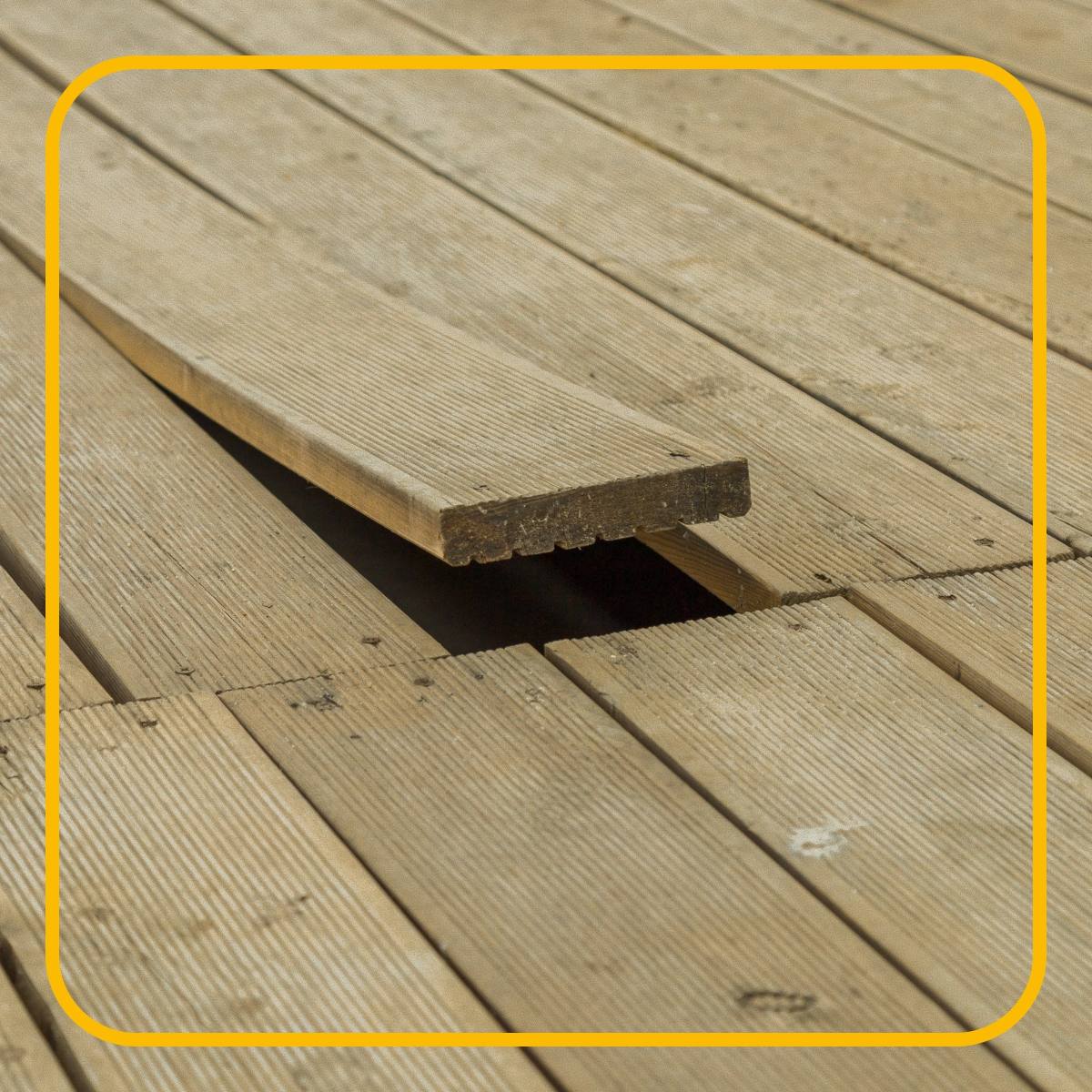
Treated lumber protects your build against rot and insects, but it works against the fasteners holding that build together. Since the industry moved away from CCA, the pressure-treated wood sold for residential and outdoor projects relies on copper-based preservatives like ACQ (Alkaline Copper Quaternary). These treatments do their job on the wood. They also create a far more aggressive environment for your fasteners than untreated lumber ever did.
The result is predictable and expensive. A fastener that should outlast the structure starts corroding within a few seasons. Fence rails loosen. Deck boards streak with rust. Siding nails bleed down a freshly finished facade. In almost every case, the wood is fine and the fastener was the wrong choice from the start.
Galvanic corrosion
The cause is a reaction between the copper in the treatment and the zinc that coats most galvanized fasteners. With water present, the two metals form a small electrochemical cell. The zinc is sacrificial: it corrodes first to protect the copper, and your protective coating slowly disappears. The wetter the wood stays, the faster the reaction runs.
That is why an electro-galvanized fastener, which carries only a thin layer of zinc, can't survive in ACQ-treated lumber. The coating is consumed long before the assembly reaches the end of its expected life. By the time rust is visible on the surface, the fastener has already lost much of what held it in place.
Hot-dipped galvanized or stainless
Two options stand up to ACQ.
Hot-dipped galvanized fasteners carry a much thicker zinc layer, applied through a high-temperature molten immersion process. Shur-Fast hot-dipped galvanized nails meet ASTM A153 Class D, the standard that matters for exterior wood construction. That heavier coating gives the fastener enough sacrificial zinc to absorb the galvanic reaction over the long haul instead of being stripped in a few seasons.
Stainless steel removes the problem at its source. It resists corrosion by composition rather than by coating, so it doesn't depend on a sacrificial layer that can be used up. Shur-Fast stainless nails come in 304 and 316 grades, which is where the next decision comes in.
304 or 316: matching the grade to the environment
Not every project needs the same stainless grade. Over-specifying costs money, and under-specifying costs the whole assembly.
Grade 304 handles most exterior applications well: decking, fencing and general outdoor woodwork away from heavy salt exposure. It is the practical default for most treated-wood projects across inland Canada.
Grade 316 is necessary once salt is involved. Coastal builds in the Maritimes, structures exposed to road de-icing salt, and anything that sees regular salt spray call for 316, which adds molybdenum for markedly better resistance to chloride corrosion. If the project sits near the ocean or takes winter salt, 316 is the requirement.
A simple way to decide
Two questions decide it: is the wood treated, and is salt a factor?
If the wood is ACQ-treated and salt isn't a concern, hot-dipped galvanized (ASTM A153 Class D) or 304 stainless will both serve. If salt is present, whether coastal air or de-icing exposure, go to 316 stainless without compromise. And if you are still reaching for standard electro-galvanized fasteners on treated lumber, that is the habit to break first.
The right fastener for treated wood costs less than buying the wrong one and paying for the callback when it fails.
The same corrosion logic applies wherever a fastener meets exterior wood, including the finish decisions we covered in our piece on fastening exterior cladding.
---
Shur-Fast manufactures and imports pneumatic nails in 304/316 stainless steel and hot-dipped galvanized finishes, engineered for the harshest Canadian conditions. Explore the full nail range or download the catalogue for complete specifications.