
 1-800-667-3061
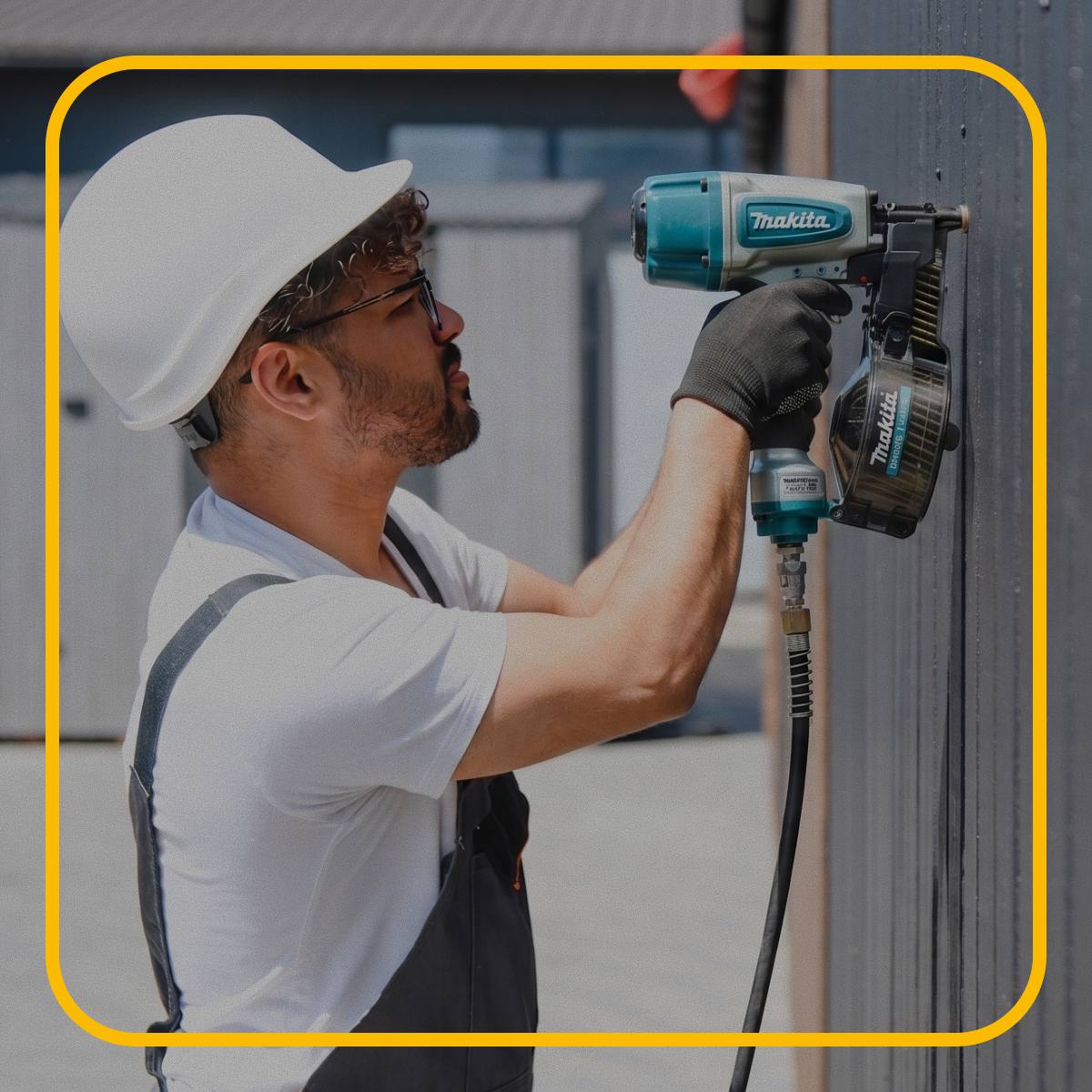
When exterior cladding fails, the cladding itself is rarely to blame. The fastener almost always is. A poorly matched nail leads to buckling, rust streaks down a brand-new facade, or gaps that eventually let water in behind the wall. The right cladding installed with the wrong fastener still ages badly, and on an exterior wall it ages in plain view.
Getting the fastening right is not complicated, but it takes attention to three things: the cladding material, the movement that material will go through, and the finish that keeps the wall clean and intact over time.
Match the fastener to the cladding
Wood, fibre cement and composite each impose their own constraints, and a single fastener choice rarely covers all three.
Fibre cement is dense and abrasive. It needs a nail that can drive cleanly through the board without splitting it, and a finish tough enough to survive the friction of penetration without shedding its coating. Wood cladding is more forgiving structurally but punishes the wrong finish, because any corrosion shows up as staining on a visible surface. Composite cladding is the most sensitive to thermal movement and tolerates an over-driven or over-tight fastener poorly. Choosing the nail starts with reading the board in front of you.
For most exterior cladding work, that points toward Shur-Fast coil and strip nails in corrosion-resistant finishes: hot-dipped galvanized for general exterior construction, or 304 and 316 stainless where humidity and salt raise the stakes.
Expansion gaps: the most expensive mistake
Exterior cladding moves. Between a summer afternoon and a Canadian winter night, the temperature swing drives continuous expansion and contraction across every board on the wall. A fastener set without respecting the designed expansion gap locks that movement in place, and the trapped stress eventually warps the board or works the anchor point loose.
Correct spacing and fastener placement are what keep the wall straight five years in, so they are not installation details to rush. The fastener has to hold the cladding securely while still letting the material move with the seasons. Drive it too tight, too deep or too close to an edge, and the failure is built in from day one.
Choose the finish for the exposure
Corrosion ruins an exterior cladding job in a predictable way: the coating gets consumed, then the fastener bleeds rust into the surface around it. On a facade, that failure isn't hidden inside an assembly. It runs down the front of the building for everyone to see.
Hot-dipped galvanized nails meeting ASTM A153 Class D handle general exterior wood construction. Where the cladding faces persistent humidity, coastal air or de-icing salt, stainless steel is the answer, with 316 grade reserved for genuine salt exposure. Specifying the finish for the environment, rather than for the lowest line-item cost, separates a facade that still looks new from one streaked with rust by its second winter.
The short version
Read the cladding material before choosing the nail. Respect the expansion gap so the wall can move without tearing itself apart. Specify the finish for the environment the wall will face. Get those three right, and the fastener disappears into a wall that holds, season after season.
---
Shur-Fast manufactures and imports pneumatic coil and strip nails engineered for siding, decking, and heavy-duty exterior construction, in 304/316 stainless and hot-dipped galvanized finishes. Explore the full nail range or download the catalogue for complete specifications.