
 1-800-667-3061
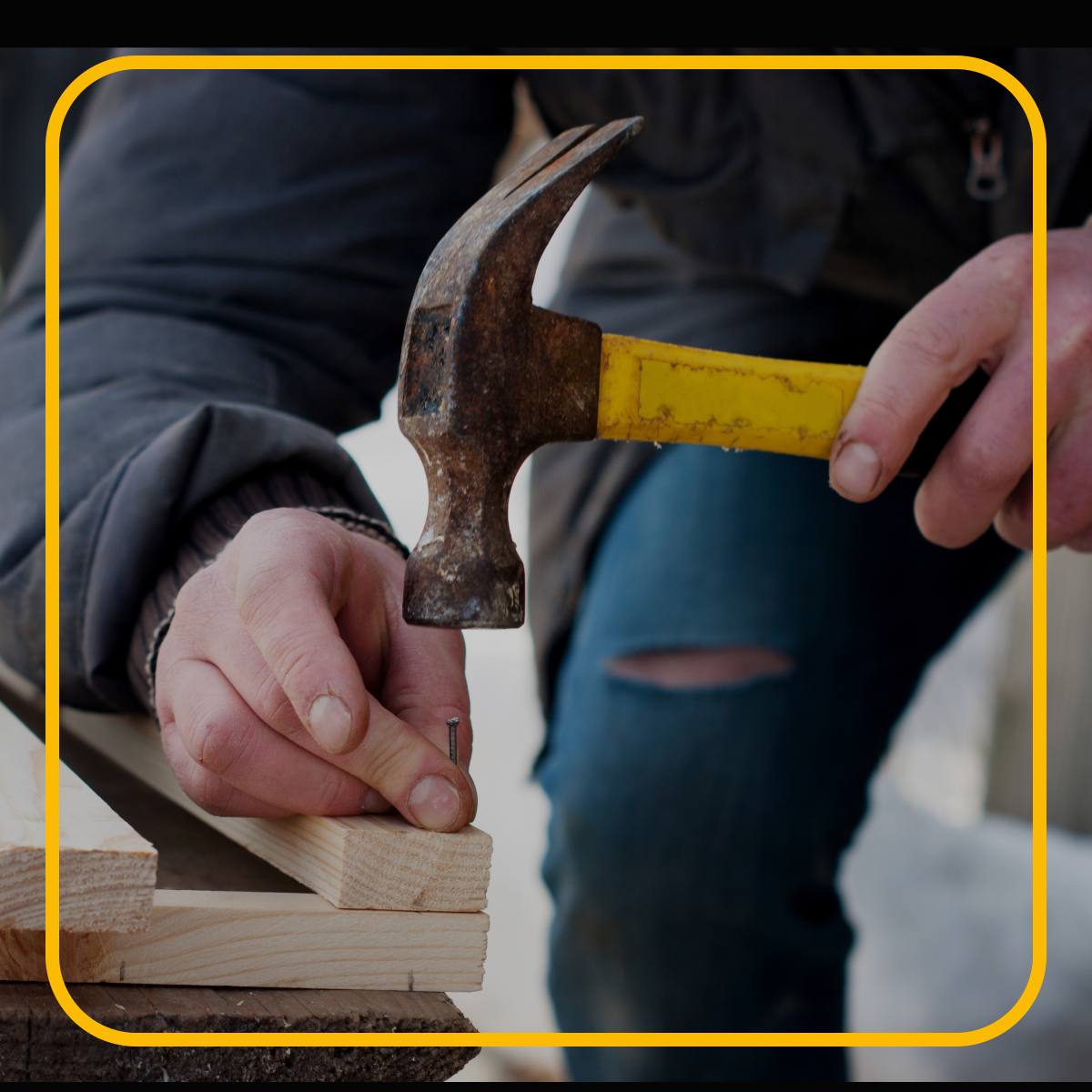
Winter changes the rules for anyone working in Canada's wood industry. A nail that performs perfectly in July can fail in January, and the reason is in the wood.
When wood freezes, the moisture in its fibres turns to ice. Frozen wood becomes harder and denser, and it loses its natural elasticity. The fibres that normally flex to accept a fastener turn rigid and brittle. Point geometry, driving pressure and holding mechanics that work in warm conditions all need to be reconsidered.
The wedge effect in frozen fibres
A standard nail with a diamond point acts like a wedge. In warm wood, it pushes the fibres apart and they close around the shank, creating grip. In frozen wood, those same fibres break instead of flexing. The result is immediate splitting, loss of structural integrity and wasted raw material.
That splitting comes from the spec. The same nail that is right for July framing becomes a liability in January unless you adjust the point geometry, shank type and driving parameters for the conditions.
Solution 1: Switch to a chisel point
The most effective change for cold-weather fastening is moving from a diamond point to a chisel point. Instead of wedging fibres apart radially, which frozen wood can't tolerate, a chisel point cuts through them directionally. It parts the wood along a controlled plane rather than forcing it open from a single point of stress.
Shur-Fast offers chisel point nails across its brad line (16GA and 18GA straight brads) and the 66° Chisel Blunt point on its coil nail line. The 66° Chisel Blunt is built for dense, hard substrates, which is what frozen wood presents. It reduces splitting at the point of entry while keeping the penetration depth needed for structural hold.
Where a chisel point isn't available in the format you need, the 48° Diamond Medium point is a compromise. It is less aggressive than a standard long diamond, so it reduces wedging force while still penetrating well in moderately frozen wood.
Solution 2: Choose the right shank for cold-weather holding
Frozen wood also holds differently. When it thaws, the ice crystals that formed around the shank melt and leave micro-voids. A smooth shank nail that held firmly in frozen wood can loosen considerably once the thaw cycle begins.
That makes ring shank and screw shank nails critical. Shur-Fast manufactures coil nails in all three shank types (smooth, ring and screw), and the choice matters more in winter than in any other season.
Ring shank nails create mechanical interlocking ridges in the wood fibres. The ridges keep their grip as moisture levels change through freeze-thaw cycles, which makes ring shank the preferred choice for exterior structural work such as siding, fencing and decking, where the fastener goes through many winters over its service life.
Screw shank nails have the highest pull-out resistance in the Shur-Fast line. The helical profile threads into the wood and resists withdrawal even when the substrate changes dimension significantly. Shur-Fast also offers screw shank resin-coated high-tensile nails for pallet manufacturing and repair, where pallets are often assembled indoors but stored and transported in sub-zero conditions.
Solution 3: Use thermoplastic coatings
In warm conditions, the friction heat from driving a nail activates thermoplastic coatings, which then bond to the surrounding wood as they cool. In winter, that heat dissipates almost instantly into the frozen substrate and the coating works less well.
Shur-Fast's coil nails and staples have an improved thermoplastic coating designed to activate at lower friction thresholds. It still bonds when heat moves into the substrate quickly, which matters on outdoor job sites where temperatures drop below –20°C and the wood has been stored outside.
Paired with a ring or screw shank, the coating adds chemical adhesion to the mechanical grip of the shank. In freeze-thaw conditions, each of the two makes up for dimensional changes that would compromise the other on its own.
Solution 4: Adjust your pneumatic pressure and your tool maintenance
Frozen wood offers noticeably more resistance to penetration than the same species at room temperature. Without an adjustment, you get partial drives, proud nail heads, and operators repositioning and double-driving, which creates waste and weakens the assembly.
The baseline recommendation is to increase pneumatic pressure when driving into frozen lumber. Pressure alone won't help if the tool isn't performing well, though. A worn driver blade or a magazine with residue buildup makes things worse in the cold, where everything already runs at tighter tolerances.
Shur-Fast's in-house tool repair and optimization service is particularly useful in winter. The same technicians who understand how cold affects fastener performance can inspect and tune your pneumatic tools: checking the driver blade, cleaning the magazine channels, and confirming that the pressure increase isn't masking an underlying tool issue that warm-weather operation was forgiving enough to hide.
Solution 5: Match the finish to the exposure
Cold-weather construction often exposes fasteners to moisture from precipitation and from condensation when frozen assemblies are brought into heated spaces. The right finish keeps corrosion from becoming a second failure after the winter installation.
Shur-Fast's finish options map directly to exposure severity.
Hot-dipped galvanized is the standard for exterior wood construction. The thick zinc layer from the high-temperature molten process (meeting ASTM A 153 Class D) resists corrosion through freeze-thaw cycles, rain and snow. It is available across all collated nail formats.
Stainless steel (304 and 316) is the most durable option for extreme environments, particularly coastal or industrial settings where salt compounds the corrosion risk. Shur-Fast offers both grades on its stainless nails, and stainless staples are also available. Grade 316 resists high-chloride environments better.
Bright finish suits protected interior applications only. It isn't recommended for any cold-weather exterior use where moisture exposure is possible.
Experience with Canadian winters
Shur-Fast makes part of its range in Montreal, where frozen wood is a baseline condition for a good part of the year, not an edge case. The point geometries, coatings and shank options in the catalogue were designed for the substrates, species and temperature ranges that Canadian manufacturers and builders actually work with.
When something doesn't perform in the cold, you call the same team that supplies the fastener, repairs the tools, and has spent a century solving fastening problems in this climate.
Experiencing splitting issues this winter?
Contact us today for a professional fastener analysis. Give us your wood species, application, and site conditions, and we'll recommend the right combination of point, shank, and finish for your winter operation.